
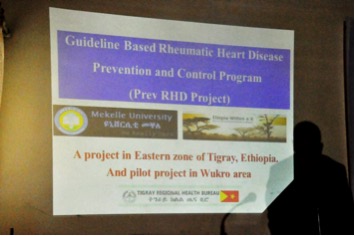
The agenda of the meeting was to discuss the initiation of the guideline-based prevention and control of rheumatic heart disease: a project in the eastern zone of Tigray, Ethiopia, and a pilot project in Wukro area (PrevRHD project).
There were three presentations, and there was a final discussion with the participants
- The current situation of heart disease in Ethiopia (Dr. Abraha Hailu)
- From Pharyngitis / Tonsillitis to Rheumatic Heart Disease (Dr. Mulugeta Naizgi)
- About the PrevRHD Project (Dr Abraha Hailu)
- Discussion with participants (Dr Tesfay G.her)
The meeting started at 9:00 am after Dr. Yonas (the coordinator of the Prev RHD project) introduced Dr. Mehari (a general practitioner and the medical Director of Wukro hospital) to give a welcoming address.
Dr Mehari welcomed the participants on behalf of the Tigray Regional Health Bureau (TRHB) and the Wukro Hospital/Health office and he emphasized that the zone and particularly kiliteawlaelo wereda need to work in close collaboration with those engaged in this project and will own the duties and responsibilities given and thanked Mekelle University-College of Health Sciences and its collaborators from Germany for taking the initiative to tackle this easily preventable but devastating disease.
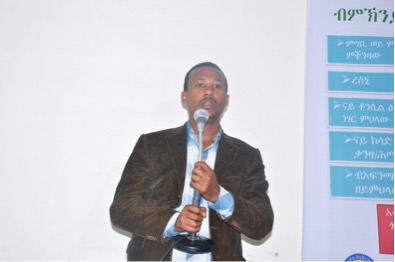
Dr Abraha, internist and cardiologist, gave his first presentation on the current situation of heart disease in Ethiopia. He stated the global burden of Diseases in terms of mortality being dominated by Non Communicable Diseases (NCDs); the leading being Cardiovascular Diseases (CVDs) followed by Cancer, chronic respiratory conditions and Diabetes. NCDs kill 38 million people each year. 75-80% of NCD deaths (28 million) occur in low- and middle-income countries. CVDs caThe project slideuse 17.5 million deaths annually, followed by cancers (8.2 million), respiratory diseases (4 million), and diabetes (1.5 million).
Dr Abraha added that a global goal has been established to reduce premature deaths due to non-communicable diseases (NCDs) by 25 per cent by 2025. Because CVD accounts for the majority of the global NCD burden, CVD and its risk factors must be adequately addressed in order to achieve this global goal. 80% of CVDs are preventable and rheumatic heart disease (RHD) is potentially 100% preventable but a fatal disease. He presented the different hospital based studies in Ethiopia regarding the prevalence of CVD, and the leading causes of CVDs are RHD, congenital hypertensive heart disease, ischemic heart disease, cardiomyopathy, and others. He also added that community based studies are scarce in Ethiopia on CVD, and the most recent data on schoolchildren show that RHD is as high as 1.8% in prevalence, and a study done in a community aged 6-25 showed that the prevalence of RHD is as high as 5.7%. Furthermore, he concluded with the remark that MU-CHS is doing its best with its partners nationally and internationally to prevent the acquisition of this disease and also to treat those affected.
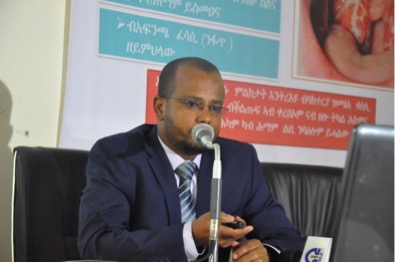
The next speaker was Dr. Mulugeta Naizgi, a pediatrician interested in infectious diseases and the link between tonsillitis and heart disease (RHD).
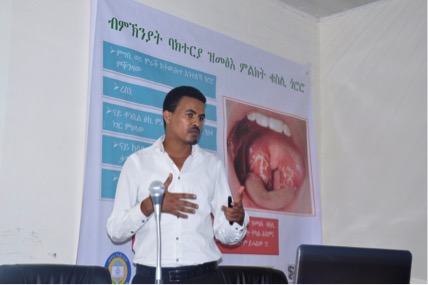
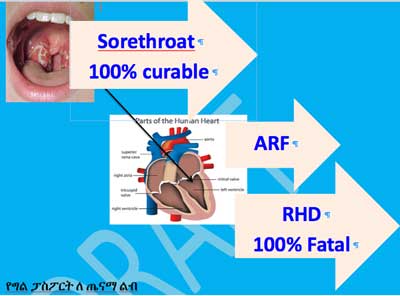
He discussed that the risk factors for acquiring tonsillopharyngitis are derived from poverty/poor socioeconomic status/poor hygiene, etc., and the etiology is a bacteria called Group A Beta hemolytic streptococcus (GABS). He emphasized that the symptoms and signs of tonsillitis, which are painful swallowing, and fever, could be easily picked up if timely treated; the bridge between heart disease and tonsillitis will be broken and hence stop heart disease. The treatment of tonsillitis is easy with a single injection of Benzathine penicillin (primary prevention). This important drug can also help in the prevention of the recurrence of acute rheumatic fever and progression of established heart disease (secondary prevention).
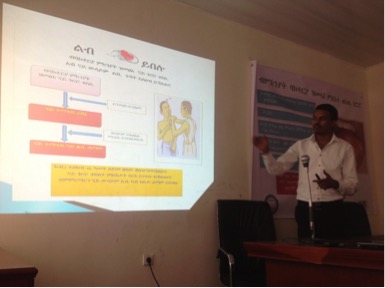
After the tea break, Dr. Abraha gave his talk about the PrevRHD project. He mentioned that currently RHD affects over 33 million people worldwide and most commonly affects women, children, and adolescents living in conditions of poverty and overcrowding; kills over 300,000 people every year, even though it is preventable.
He stressed on the fact that RHD is a lifelong condition, which can be fatal if good access to care and appropriate treatment are not available
Dr Abraha added that the average age of those affected with RHD in Ethiopia at 26years. He explained the possible sites of intervention in the prevetion of RHD and which is best for us as a nation to tackle RHD?
- Primordial prevention
- Primary prevention
- Secondary prevention
- Tertiary Prevention (valvuloplasty, open-heart surgery, follow-up, and treatment of complications
He mentioned the seven key actions endorsed by African Union to tackle RHD among which are the establishment of RHD registry, availing penicillin, improving access to reproductive health services for women with RHD, decentralizing expertise, and offering tertiary care for those in need. As a nation, Ethiopia should bring penicillin to children, register them, and take the experiences of other countries like Cuba and Nepal to materialize this.
Dr. Abraha stated that as a nation, the Federal Ministry of Health has done the following so far
- Endorsed the PASCAR /AU seven key actions and is working with global partners
- Included RF/RHD in the package of NCD control program
- Finalized a national protocol on RF/RHD prevention and treatment guidelines
- Developed a teaching material to the mid and low level health professionals
- Developed a National RF/RHD REGISTRY
- Showing a strong commitment to include the prevention strategy in SCHOOL HEALTH program
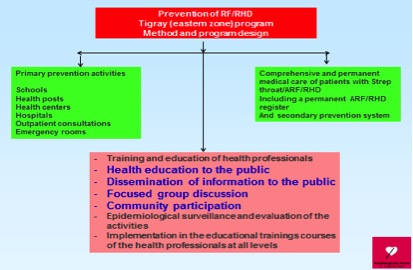
He then finally put on how the Prev RHD program will function, what challenges it will face, and what opportunities it has now and for the future.
Subsequently, there was a panel discussion led by Dr Tesfay Gher, PhD, assistant professor of public health.
Dr Tesfay reminded the audience by summarizing what was presented by the two speakers, and he made the remark that we say, “A mother should never die while giving a life/birth.” We should also think the same way about other segments of the community, i.e., for example, we should not allow the mother’s kid to die. He then opened the floor for discussion.
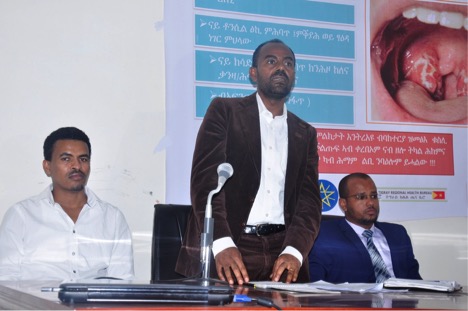
Teacher Yilma from Wukro preparatory school thanked the organizers and organizations, especially Mekelle University for doing this as part of its community service duty and responsibility in this project and said that feels lucky that the Wukro area is selected to be the pilot project site. He said that as a teacher he is happy to know the diseases symptoms and signs and will contribute to the dissemination of this information to the community and his students. He said he was stunned to learn that this easily preventable disease is very expensive and unaffordable by Ethiopians. Finally, he made the remark that the town’s sanitation should also be invited to this kind of forums and listen the link of an unclean environment and RHD.
Teachers Hailemariam and G. Selassie said that now we have heard this, and what is expected from us? It is to teach our students on tonsillitis and raise their awareness! How? Using this opportunity on the progress made by Mekelle University, use minimedia at school, pamphlets, Mekelle University FM radio broadcasts every Saturday etc…
Lema G. Tsadik from Baeta Health Center said that even if as health professionals we heard about RHD we never really worked as if it was our daily job and we need to address the issue of implementation in practical terms. This disease is 100% preventable but 100% fatal as has been said today and so we have a good reason to work on harder on it.
A representative of the youth association of Wukro area, Mr. G. Michael, said that it is for the very first time that he is listening and has deeply understood that UNCLEANLINESS leading to TONSILLITIS ends up in SEVERE DISABLING DISEASE. He recommended mobilization of different sectors under his association and similar other organizations, institutions and improving the awareness, as the main problem is AWARENESS, otherwise is DOABLE.
Aba Fisseha, a religious leader, said that even if he has been to different meetings on health issues and others, he has never heard about the fact that tonsillitis leads to heart disease before. We have heard here also that tonsillitis is caused by bacteria and is easily treatable, but our community believes that tonsillitis is caused by spitting on FIRE or spitting on the toilet or is due to the evil eye, etc. He also asked a question on why tonsillitis is seasonal and was addressed later.
Melakegenet Abraha also forwarded his opinion by saying that tonsillitis and its complications have been neglected while it has been very easily preventable. He added that the CHURCH can have a POSITIVE impact, as it can get a huge number of people in a single day, and the church can be a way to disseminate this information in a day to a big portion of the community.
Representative from women’s affairs Mrs. Fireweini emphasized changing the society’s thinking/beliefs/practices through education (for example, some mothers say tonsillitis is related to the disappearance of a moon). She also added health facilities should be ready to address the public’s demands.
Sr. Selas from Kelete Awlaelo Health Administration/Office said that this is a very good initiative, and we need to have a common understanding. I hope trainings will follow for the health professionals at all levels, including the health extension workers (HEWs). She raised the issue of HEWs giving gentamicin in health posts, so why don’t they give Benzathine penicillin?
There were many others who gave their reflections about similar experiences before at school during the screening programs, about the prevention policy of our nation and the beauty of this project, and the fact that health professionals should practice early detection, treatment, and referral of cases with RF/RHD.
Again, Dr. Mehari said that we have all the evidence, and hence now we need to go to ACTION by collaborating with TRHB, MUCHS and Etiopia-Witten. We can work together in awareness creation by different methods like in catchment meetings, public conferences, etc.
As an end to the discussion, reflections were given from the panel, and the recommendations on how to proceed for future to make this project a success were noted. Subsequently, Dr. Temesgen, the pediatric cardiologist, also addressed the audience to be part of this initiative and support it.
A closing remark was made by Dr. Tsegay, the vice medical director of Ayder Comprehensive Specialized Hospital. He said that prevention is the best policy and is doable with little cost, as is done in Cuba. Our region has received different awards in conservation and in tobacco control, which indirectly and directly affect heart health, respectively.
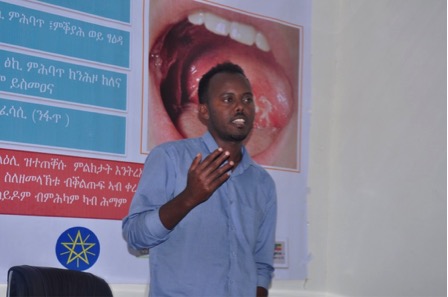
At the end participants gave an interview to the journalists from Tigray Television and Mekelle FM 104.4, to be broadcast to the community at large.
Author: Dr. Abraha Hailu Weldgerima, Mekelle University—Ayder Referral Hospital